使用 HotPDF Delphi 元件實現 22 種條形碼型別。
在當今的數字世界中,條形碼是庫存管理、零售運營和資料跟蹤系統的基石。 能夠生成包含各種條形碼型別的專業 PDF 文件對於各行各業的企業來說至關重要。 本綜合指南探討了使用現代開發工具實現 22 種不同的條形碼標準,重點是使用 HotPDF VCL 庫的 Delphi 和 C++Builder 實現。 HotPDF VCL 庫.
瞭解條形碼標準及其應用
條形碼是資料的機器可讀表示,它通過視覺圖案編碼資訊。 不同的行業和應用需要特定的條形碼標準,每個標準都針對特定的用例進行了最佳化。 瞭解這些標準對於開發人員實現條形碼生成系統至關重要。
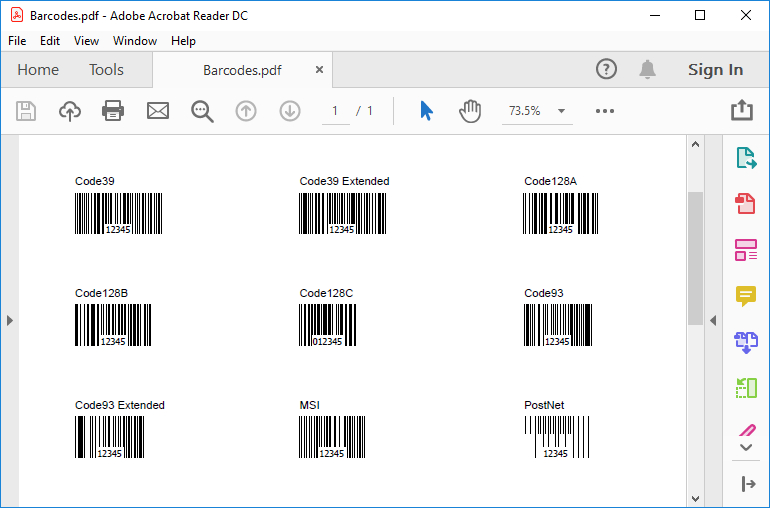
線性條形碼類別
線性條形碼,也稱為一維條形碼,通過不同寬度的平行線和空格來編碼資料。 最常用的標準包括:
- 程式碼 25 家族: 包括交錯、工業和矩陣變體,僅適用於數字資料。
- 程式碼 39 和程式碼 93: 字母數字編碼,支援擴充套件字元集。
- Code 128: 高密度編碼,具有三種子集變體(A、B、C)。
- UPC/EAN 家族: 面向零售的標準,包括 UPC-A、UPC-E、EAN-8 和 EAN-13。
- 專用標準: MSI、PostNet 和 Codabar,適用於特定行業應用。
條形碼資料編碼原則
每種條形碼標準都遵循特定的編碼規則,這些規則決定了資料如何在視覺上表示。例如,Code 128 使用不同的編碼表,具體取決於子集。
|
1 2 3 |
Code 128A: Uppercase letters, control characters, digits Code 128B: Mixed case letters, digits, special characters Code 128C: Numeric pairs encoded as single characters (high density) |
瞭解這些編碼原則對於選擇適合特定資料要求的條形碼型別至關重要。
現代 PDF 條形碼生成架構
專業條形碼生成需要一個強大的架構,該架構可以處理多種條形碼標準,同時保持 PDF 文件的完整性。現代方法涉及將條形碼生成功能直接整合到 PDF 建立庫中。
從傳統 API 遷移到現代 API。
傳統的條形碼生成通常涉及複雜的、多步驟的過程,並且依賴於外部元件。現代實現通過整合的API簡化了這個過程,該API可以同時處理條形碼生成和PDF嵌入。
從舊方法到現代方法的演變,在開發人員體驗和輸出質量方面都帶來了顯著的改進。
|
1 2 3 4 5 6 7 8 9 10 11 |
Legacy Approach: 1. Generate barcode as image file 2. Load image into PDF library 3. Position and scale image 4. Handle cleanup of temporary files Modern Approach: 1. Direct barcode generation within PDF context 2. Vector-based output for scalability 3. Integrated positioning and sizing 4. No temporary file management required |
在Delphi中實現全面的條形碼生成。
Delphi是一個非常適合實現全面條形碼生成系統的平臺。該語言的強型別、元件架構以及廣泛的RTL使其非常適合建立強大的PDF生成應用程式。
Delphi實現策略。
Delphi的實現重點是建立一個控制台應用程式,該應用程式在一個PDF文件中演示所有支援的條形碼型別。這種方法既提供了一個全面的參考,又是一個實用的測試工具。
|
1 2 3 4 5 6 7 8 9 10 11 12 13 14 15 16 17 18 19 20 21 |
program Barcodes; {$APPTYPE CONSOLE} uses System.Classes, System.SysUtils, Vcl.Graphics, HPDFDoc; var I, H: Integer; HotPDF: THotPDF; const Names: array [0 .. 21] of AnsiString = ( 'Code 25 Interleaved', 'Code 25 Industrial', 'Code 25 Matrix', 'Code39', 'Code39 Extended', 'Code128A', 'Code128B', 'Code128C', 'Code93', 'Code93 Extended', 'MSI', 'PostNet', 'Codebar', 'EAN8', 'EAN13', 'UPC_A', 'UPC_E0', 'UPC_E1', 'UPC Supp2', 'UPC Supp5', 'EAN128A', 'EAN128B' ); |
智慧測試資料生成。
在條形碼生成中,一個關鍵的挑戰是確保每種條形碼型別都接收到適當的測試資料,這些資料符合其規範。Delphi的實現包括一個智慧函式,該函式為每種條形碼標準提供有效的測試資料。
|
1 2 3 4 5 6 7 8 9 10 11 12 13 14 15 16 17 18 19 20 21 22 23 |
function GetBarcodeText(BarcodeType: Integer): AnsiString; begin case BarcodeType of 0, 1, 2: Result := '12345678'; // Code 25 variants (digits only) 3: Result := 'ABC123'; // Code39 (alphanumeric) 4: Result := 'Code39Ext'; // Code39 Extended (mixed case) 5, 6: Result := 'Hello123'; // Code128A/B (text) 7: Result := '123456789012'; // Code128C (digits only, even length) 8: Result := 'CODE93'; // Code93 (uppercase) 9: Result := 'Code93Ext'; // Code93 Extended (mixed case) 10: Result := '123456789'; // MSI (digits only) 11: Result := '12345'; // PostNet (ZIP code) 12: Result := 'A12345B'; // Codabar (starts/ends with letter) 13: Result := '1234567'; // EAN8 (7 digits, check digit added) 14: Result := '123456789012'; // EAN13 (12 digits, check digit added) 15: Result := '012345678905'; // UPC_A (12 digits) 16, 17: Result := '1234567'; // UPC_E variants (7 digits) 18: Result := '59'; // UPC Supp2 (2 digits) 19: Result := '12345'; // UPC Supp5 (5 digits) 20, 21: Result := 'EAN128TEST'; // EAN128 variants (text) else Result := '12345'; // Default end; end; |
這種方法確保每種條形碼型別都使用符合其特定要求的的資料進行測試,從而防止生成錯誤,並提供真實的示例。
最佳化佈局演算法
Delphi 版本的實現使用了複雜的佈局演算法,該演算法以最佳的網格格式排列 22 種不同的條形碼型別。
|
1 2 3 4 5 6 7 8 9 10 11 12 13 14 15 16 17 18 19 20 21 22 23 24 25 26 27 28 29 30 31 32 33 34 |
begin HotPDF := THotPDF.Create(nil); try HotPDF.AutoLaunch := true; HotPDF.FileName := 'Barcodes.pdf'; HotPDF.BeginDoc; // Display 22 barcode types in a compact layout (4 columns x 6 rows) for I := 0 to 5 do // 6 rows (0-5) begin for H := 0 to 3 do // 4 columns (0-3) begin if ((I * 4) + H) > 21 then Break; // Total 22 barcodes (0-21) // Use new DirectDrawBarcode method with compact size HotPDF.CurrentPage.DirectDrawBarcode( H * 130 + 30, // X position (tighter spacing) I * 110 + 40, // Y position 100, 30, // Width, Height (optimized for clarity) GetBarcodeText((I * 4) + H), // Appropriate test data (I * 4) + H // BarcodeType (0-21) ); HotPDF.CurrentPage.SetFont('Arial', [], 6); HotPDF.CurrentPage.TextOut(H * 130 + 30, I * 110 + 75, 0, Names[(I * 4) + H]); end; end; HotPDF.EndDoc; finally HotPDF.Free; end; end. |
這種佈局演算法確保了最佳的空間利用率,同時保持了條形碼的可讀性,並提供了清晰的型別標識。
C++Builder 實現
C++Builder 的實現提供了與 Delphi 版本相同的功能,同時具有 C++ 語法和更廣泛的平臺相容性的優勢。該實現展示瞭如何將現代 C++ 技術應用於 PDF 條形碼生成。
C++ 架構和記憶體管理
C++Builder 的實現強調了正確的記憶體管理和異常安全性,這是專業 C++ 開發的關鍵方面。
|
1 2 3 4 5 6 7 8 9 10 11 12 13 14 15 16 17 18 19 20 21 22 23 24 25 26 27 28 29 30 31 |
int main(int argc, char* argv[]) { THotPDF* HotPDF = NULL; try { HotPDF = new THotPDF(NULL); HotPDF->AutoLaunch = true; HotPDF->FileName = "Barcodes.pdf"; HotPDF->BeginDoc(); std::cout << "Creating PDF with 22 different barcode types..." << std::endl; // Implementation continues... } catch (Exception& E) { std::cerr << "Error: " << E.Message.c_str() << std::endl; if (HotPDF) delete HotPDF; return 1; } catch (...) { std::cerr << "Unknown error occurred!" << std::endl; if (HotPDF) delete HotPDF; return 1; } if (HotPDF) delete HotPDF; return 0; } |
型別安全的條形碼資料管理。
C++ 版本的實現包含一個強大的資料管理系統,該系統確保了型別安全,同時提供了與 Delphi 版本相同的智慧測試資料生成功能:
|
1 2 3 4 5 6 7 8 9 10 11 12 13 14 15 16 17 18 19 20 21 22 23 24 25 |
// Array of barcode type names const AnsiString Names[22] = { "Code 25 Interleaved", "Code 25 Industrial", "Code 25 Matrix", "Code39", "Code39 Extended", "Code128A", "Code128B", "Code128C", "Code93", "Code93 Extended", "MSI", "PostNet", "Codebar", "EAN8", "EAN13", "UPC_A", "UPC_E0", "UPC_E1", "UPC Supp2", "UPC Supp5", "EAN128A", "EAN128B" }; // Function to get appropriate test text for each barcode type AnsiString GetBarcodeText(int BarcodeType) { switch (BarcodeType) { case 0: case 1: case 2: return "12345678"; // Code 25 variants (digits only) case 3: return "ABC123"; // Code39 (alphanumeric) case 4: return "Code39Ext"; // Code39 Extended (mixed case) // Additional cases for all 22 barcode types... default: return "12345"; // Default fallback } } |
使用者友好的進度報告。
C++ 版本的實現包含全面的進度報告,可在條形碼生成過程中提供即時反饋:
|
1 2 3 4 5 6 7 8 9 10 11 12 13 14 15 16 17 18 19 20 21 22 23 24 |
for (int I = 0; I <= 5; I++) // 6 rows (0-5) { for (int H = 0; H <= 3; H++) // 4 columns (0-3) { int barcodeIndex = (I * 4) + H; if (barcodeIndex > 21) break; // Total 22 barcodes (0-21) // Generate barcode with optimized parameters HotPDF->CurrentPage->DirectDrawBarcode( H * 130 + 30, // X position I * 110 + 40, // Y position 100, 30, // Width, Height GetBarcodeText(barcodeIndex), // Appropriate test data barcodeIndex // BarcodeType (0-21) ); // Add descriptive label HotPDF->CurrentPage->SetFont("Arial", TFontStyles(), 6); HotPDF->CurrentPage->TextOut( H * 130 + 30, I * 110 + 75, 0, Names[barcodeIndex] ); // Provide progress feedback std::cout << "Generated barcode " << (barcodeIndex + 1) << "/22: " << Names[barcodeIndex].c_str() << std::endl; } } |
高階條形碼規範相容性。
專業的條形碼生成需要嚴格遵守行業標準。每種條形碼型別都有特定的資料格式、校驗位計算和視覺表示要求。
Code 128 規範詳細資訊。
Code 128 是一種非常通用的條形碼標準,支援三種不同的字元集:
|
1 2 3 4 5 6 7 8 9 10 11 12 13 14 |
Code 128 Subset A: - ASCII characters 00-95 (0-9, A-Z, control characters) - Start character: 11010000100 - Used for: Uppercase text, control characters Code 128 Subset B: - ASCII characters 32-127 (0-9, A-Z, a-z, special characters) - Start character: 11010010000 - Used for: Mixed case text, standard keyboard characters Code 128 Subset C: - Numeric pairs 00-99 encoded as single characters - Start character: 11010011100 - Used for: High-density numeric data (even number of digits) |
UPC/EAN 系列規範
UPC/EAN 系列代表在零售環境中使用的最廣泛的條形碼標準。
|
1 2 3 4 5 6 7 8 9 10 11 12 13 14 15 16 17 18 19 |
UPC-A Structure: - 12 digits total - First digit: Number system character - Next 5 digits: Manufacturer code - Next 5 digits: Product code - Last digit: Check digit (calculated) EAN-13 Structure: - 13 digits total - First 2-3 digits: Country code - Next 4-5 digits: Manufacturer code - Next 5 digits: Product code - Last digit: Check digit (calculated) EAN-8 Structure: - 8 digits total - First 2-3 digits: Country code - Next 4-5 digits: Product code - Last digit: Check digit (calculated) |
PDF 整合和向量圖形的優勢
現代 PDF 條形碼生成利用向量圖形功能,以確保在所有輸出尺寸和解析度下獲得最佳質量。 這種方法比基於點陣圖的替代方案具有顯著優勢。
向量與柵格條形碼生成
基於向量的條形碼生成為專業應用提供幾個關鍵優勢:
- 無限可擴充套件性向量條形碼在任何尺寸下都能保持清晰的邊緣。
- 列印質量: 列印時無畫素化或質量下降。
- 檔案大小效率: 與高解析度點陣圖相比,檔案尺寸更小。
- 專業外觀: 清晰、精確的線條,適用於商業用途。
PDF結構用於條形碼整合
PDF格式為條形碼資料提供理想的容器,因為它支援向量圖形和精確定位。
|
1 2 3 4 5 6 7 8 9 10 11 12 13 14 15 16 17 18 19 20 21 22 |
PDF Barcode Object Structure: 1 0 obj << /Type /XObject /Subtype /Form /BBox [0 0 100 30] /Matrix [1 0 0 1 0 0] /Resources << /ProcSet [/PDF] >> /Length 245 >> stream q 1 0 0 1 0 0 cm % Barcode drawing commands 0.8 w 0 0 m 0 30 l S % Additional barcode elements... Q endstream endobj |
自動化構建和開發工作流程
專業的開發需要強大的自動化構建功能,以確保在不同的環境和平臺上獲得一致的結果。Delphi 和 C++Builder 的實現都包含全面的構建指令碼。
自動化構建配置
自動化構建系統提供針對特定平臺的編譯,並具有適當的最佳化設定。
|
1 2 3 4 5 6 7 |
Build Script Features: - Platform detection (Win32/Win64) - Compiler optimization settings - Library path configuration - Automatic dependency resolution - Error handling and reporting - Post-build testing and validation |
質量保證整合
開發工作流程包括整合的質量保證措施,用於驗證條形碼生成的準確性。
- 規範合規性測試自動驗證條形碼格式是否符合規範。
- 視覺質量評估: 對生成的條形碼清晰度的程式化分析
- 跨平臺驗證: 確保在不同系統上的輸出一致性
- 效能基準測試: 監控生成速度和記憶體使用情況
行業應用和用例
完整的條形碼生成系統滿足多個行業和應用領域的實際需求。
零售和庫存管理
零售環境需要支援多種條形碼標準,以適應不同的產品類別和供應商需求:
- UPC/EAN 碼 用於消費品
- Code 128 用於內部庫存跟蹤
- Code 39。 用於資產管理
- 補充碼 用於促銷價格。
醫療保健和製藥。
醫療保健應用需要最高的準確性和對行業標準的合規性。
- Code 128 用於患者識別。
- EAN-128。 用於藥品包裝。
- Code 39。 用於裝置跟蹤。
- MSI 用於實驗室樣本。
物流和運輸。
物流運營需要強大的條形碼系統,能夠處理高吞吐量。
- Code 128 用於包裹跟蹤。
- PostNet 用於郵政自動化。
- 編碼 93。 用於安全文件跟蹤。
- Codabar。 用於圖書館和血庫應用。
效能最佳化和最佳實踐。
專業的條形碼生成系統必須在質量、效能和資源利用之間取得平衡。該實現包括多種最佳化策略,以確保高效執行。
記憶體管理最佳化。
記憶體管理對於生成大量條形碼的應用程式至關重要。
|
1 2 3 4 5 6 7 8 9 10 11 12 13 14 15 16 17 18 |
// Delphi memory management best practices try HotPDF := THotPDF.Create(nil); try // Barcode generation operations HotPDF.BeginDoc; // ... generation code ... HotPDF.EndDoc; finally HotPDF.Free; // Ensure proper cleanup end; except on E: Exception do begin // Handle errors gracefully WriteLn('Error: ', E.Message); end; end; |
批次處理策略。
對於需要生成大量條形碼的情況,批次處理可以顯著提高效能。
- 文件重用: 在單個PDF文件中建立多個條形碼。
- 資源池: 重用PDF物件和圖形上下文。
- 延遲求值: 僅在需要時生成條形碼。
- 並行處理。: 利用多個核心進行獨立的條形碼生成。
未來發展和新興標準
條碼行業不斷發展,新的標準和技術應運而生,以滿足數字商業和供應鏈管理領域的新需求。
二維條碼整合
雖然本次實現側重於線性條碼,但該架構為未來整合二維標準,如二維碼、Data Matrix 和 PDF417,奠定了基礎。
增強的錯誤糾正
未來的發展可能包括高階錯誤糾正功能,可在惡劣環境下或在各種基材上提高條碼的可讀性。
結論。
專業 PDF 條碼生成需要對條碼規範、PDF 結構以及現代開發實踐有深入的理解。本指南中提供的實現示例展示瞭如何使用 Delphi 和 C++Builder 建立強大、可擴充套件的條碼生成系統,以滿足實際需求。
智慧測試資料生成、最佳化的佈局演算法以及嚴格的規範符合性相結合,確保生成的條碼符合專業標準,同時為開發人員提供實用、可重用的程式碼示例。無論您是實施庫存管理系統、零售應用程式還是專業行業解決方案,這些技術都為專業條碼生成提供了堅實的基礎。
通過利用現代 PDF 庫並遵循既定最佳實踐,開發人員可以建立條形碼生成系統,該系統能夠在各種應用和環境中提供一致、高質量的結果。這裡展示的全面方法確保與行業標準相容,同時保持自定義實現的靈活性。